A 10-yard roll-off container holds approximately 55 to 60 standard 33-gallon contractor trash bags, functioning as the ideal logistical match for residential bathroom remodels, single-room flooring removals, kitchen…
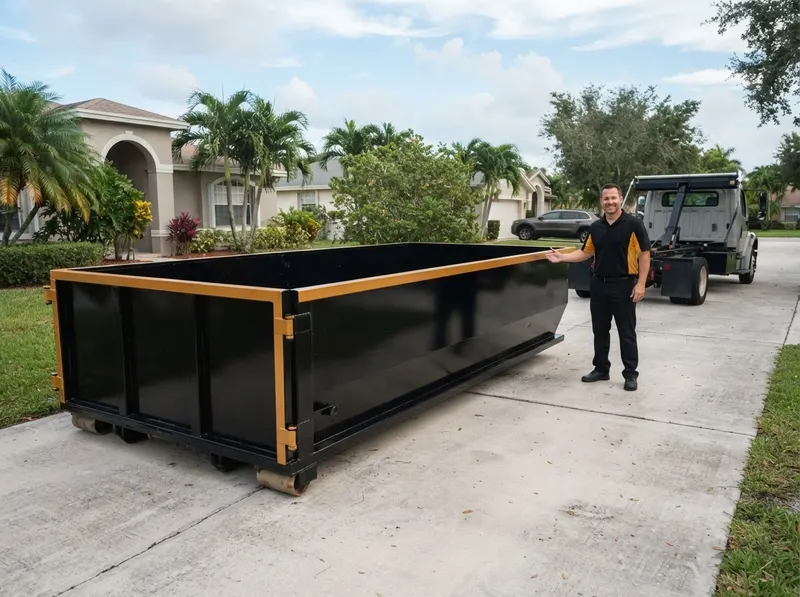
A 10-yard roll-off container holds approximately 55 to 60 standard 33-gallon contractor trash bags, functioning as the ideal logistical match for residential bathroom remodels, single-room flooring removals, kitchen cabinet tear-outs, and small estate decluttering. The container features low 3.5-foot sidewalls that allow walk-up loading over the sides without demanding the overhead lifting clearance required by deeper roll-offs. This lower clearance profile prevents accidental impacts with overhead utility lines, tropical tree canopies, and carport overhangs frequently encountered across historic properties in Coconut Grove, Little Havana, and Coral Way. The operational trade-off of the 10-yard container centers on raw physical volume versus spatial footprint: while it minimizes occupied driveway area, dense municipal construction materials like solid poured concrete, loose earth, or multi-room roof tear-offs quickly exceed standard capacity, making larger 20-yard or 30-yard roll-offs the appropriate operational choice for heavy structural demolition.
Residential placement throughout dense urban corridors like Brickell, Edgewater, Wynwood, and the Design District requires strict surface logistics. Subtropical heat softens driveway sealants and increases the vulnerability of decorative travertine, stamped pavers, and limestone slabs. Roll-off delivery protocol places continuous three-quarter-inch wood protection runners beneath all contact steel wheels prior to drop-off, preventing structural cracking, cosmetic scraping, and paver shifting under static weight. When drop-off occurs on public thoroughfares, placement must align with the City of Miami Department of Public Works right-of-way obstruction guidelines. Safe street positioning requires compliant retroreflective markers and visual staging that adheres to the Manual on Uniform Traffic Control Devices standards to maintain visibility for nocturnal neighborhood traffic.
Material handling regulations enforce clear operational boundaries. Discarded sheetrock, packaging, and non-salvageable millwork travel directly to licensed regional sorting centers, complying with handling mandates established by the Florida Department of Environmental Protection Solid Waste Management Program. Standard rentals accept common renovation materials alongside mixed yard trimming, but exclude hazardous liquids, wet paints, medical waste, and sealed pressurization cylinders as outlined by EPA Title 40 hazardous waste standards. Discarded refrigeration units and heat-pump air-conditioning assemblies require confirmed refrigerant purging documentation under Clean Air Act Section 608 before transfer. End-of-life electronics and computer monitors must route away from general landfills through certified SERI R2 standard electronics channels. Reusable architectural fixtures, unbroken vanities, and unblemished hardware salvage can be redirected to local reuse channels managed by Habitat for Humanity ReStore locations rather than entering bulk landfill streams.
Jobsite staging follows simple, dependable steps to maintain complete property protection. Step 1: Confirm an unobstructed approach path measuring at least 10 feet in width with 14 feet of overhead clearance, clear of low-hanging wires or palm branches. Step 2: The delivery truck backs directly into position, sets heavy-duty wood underlayment directly over the designated asphalt, concrete, or stone surface, and lowers the roll-off smoothly without surface dragging. Step 3: Fill the container evenly across the bed, keeping debris flat and level with the top rim to comply with transport tie-down security regulated by the Federal Motor Carrier Safety Administration Cargo Securement Rules. Step 4: Call (786) 902-6798 to initiate your scheduled pickup window, where the truck pulls the sealed container back onto the bed and conducts a visual ground inspection of the unloading perimeter.
Every job gets a firm, written price after a free on-site visit.
For standards, safe disposal, and service guidance on DUMPSTER in Miami, FL, useful references include U.S. EPA, EPA, EPA, OSHA, Earth911, and Google Maps. General consumer and small-business resources are available from USA.gov, Better Business Bureau, FTC Consumer Advice, U.S. Small Business Administration, and Ready.gov.
Tell us about your 10-yard dumpster rental job in Miami and we'll send a clear, written quote, usually the same day.
 ClearRock Disposal